
That item has been discontinued, but here are similar options.




Mid-Century Nightstands, Sized to the Bed
In a mid-century modern bedroom, a nightstand is the piece you reach for in the dark, so it is judged by feel before it is judged by looks. It holds the lamp that lights the room after the overheads go off, carries the book and the glass of water, and sits at exactly the height your hand expects. That height is the whole game. Keep the top near the mattress line and the lamplight falls across the pillow where you read. Set it too tall or too short and even a considered bedroom feels faintly off once the day ends.
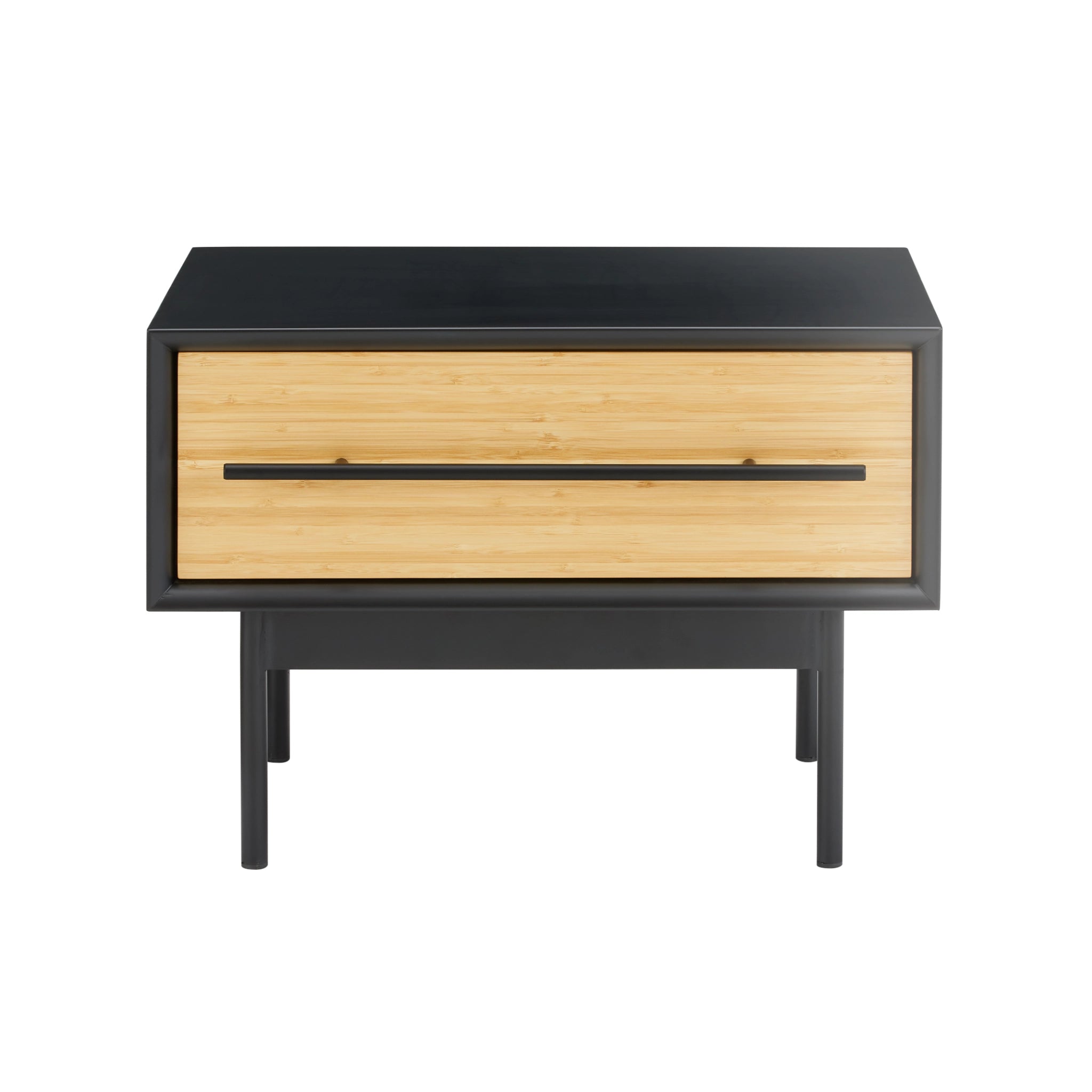
Mid-century treated the bedside table as small architecture, the same discipline that runs through its wider mid century modern collection. Tapered legs lift it so the floor keeps running underneath and the piece feels light next to a low bed. A single drawer hides what a bedside collects, while an open shelf below keeps a book or two in reach. In low light the wood does the work, its grain deepening as shadow moves across a drawer front.
How to choose a mid-century nightstand
Match the height to the mattress
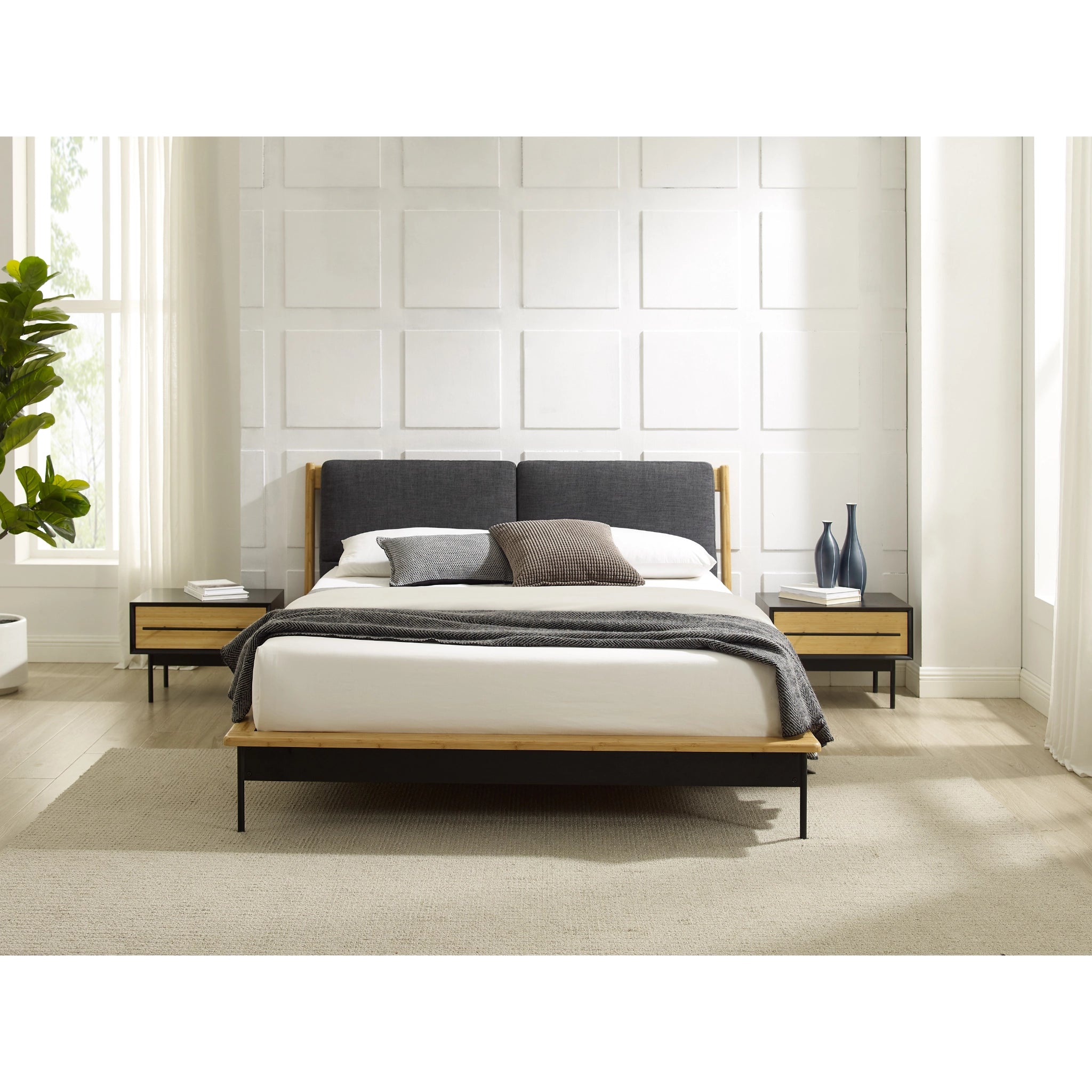
The measurement that matters is the gap between the mattress top and the nightstand top. Keep them close, within an inch or two. A bedside table that reaches well above the mattress pushes the lamp into your eyeline and throws light where you do not want it. One that sits far below makes you reach down for the switch every night. This is the detail most bedrooms get wrong, and it is the easiest one to get right.
Drawer, shelf, or both
A nightstand with a drawer hides the charger, the reading glasses, the small things a bedside collects but should not display. An open shelf keeps a book within reach and lets the piece feel lighter in a small room. When the bedside overflows, a low mid century modern dresser across the room takes what the nightstand cannot, so the surface stays clear. Choose by what your side of the bed actually holds, not by what looks tidy in a showroom photo, and leave depth for a lamp base plus a phone and a glass.
Wood, or a note of contrast
A wood nightstand stays quiet and lets the lamp be the event, its grain warming as the light drops. Keep that wood in conversation with the mid century modern beds and the room holds together. If you want contrast, a stone or marble top returns light and cools the palette against warm walnut or oak. Color does the same work. A black nightstand sharpens the edges of a pale room, while a lighter finish keeps a dark wall from closing in. Choose the one that agrees with the rest of the room.
Lamplight lives here
The nightstand is where a bedroom’s evening light gets decided. Keep one warm, low source on each side, at a height that skims the bed rather than floods it, and the room shifts from a place you sleep to a place you unwind. Size the nightstand lamp to the piece. A tall lamp on a low stand tips the balance, while a compact one leaves the surface usable. Warm bulbs over bright ones, every time.
Buying the pair
Two matching nightstands frame a bed and steady the whole wall, which is why a set of two is usually the right buy rather than a single stand. They do not have to be identical twins, but they should share posture and wood tone so the arrangement reads as one thought. Each piece here is chosen by AURA Modern Home for proportion, material honesty, and how it behaves once the lamps are the only light left on. Settle the bed first, then let the nightstands answer it.