
That item has been discontinued, but here are similar options.


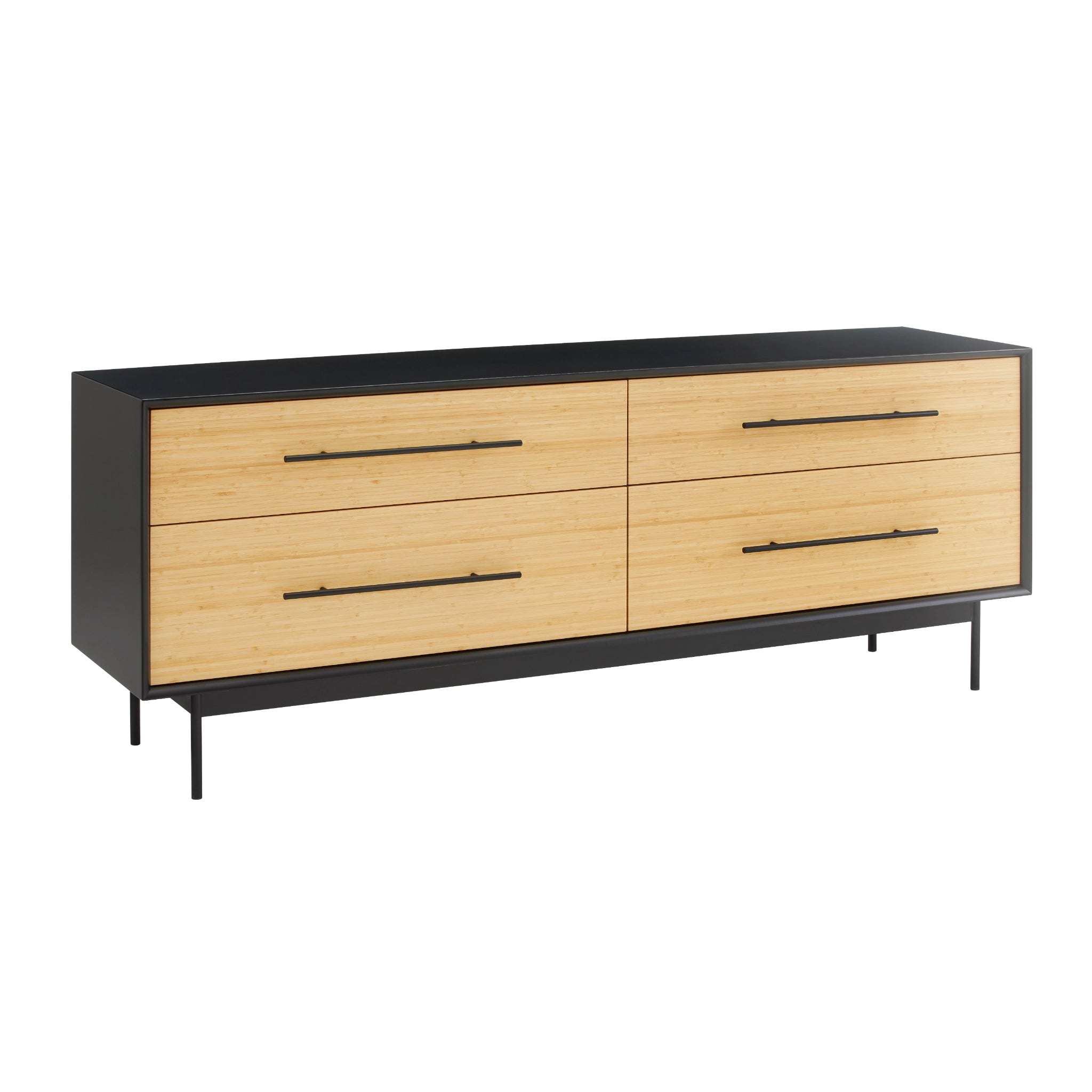

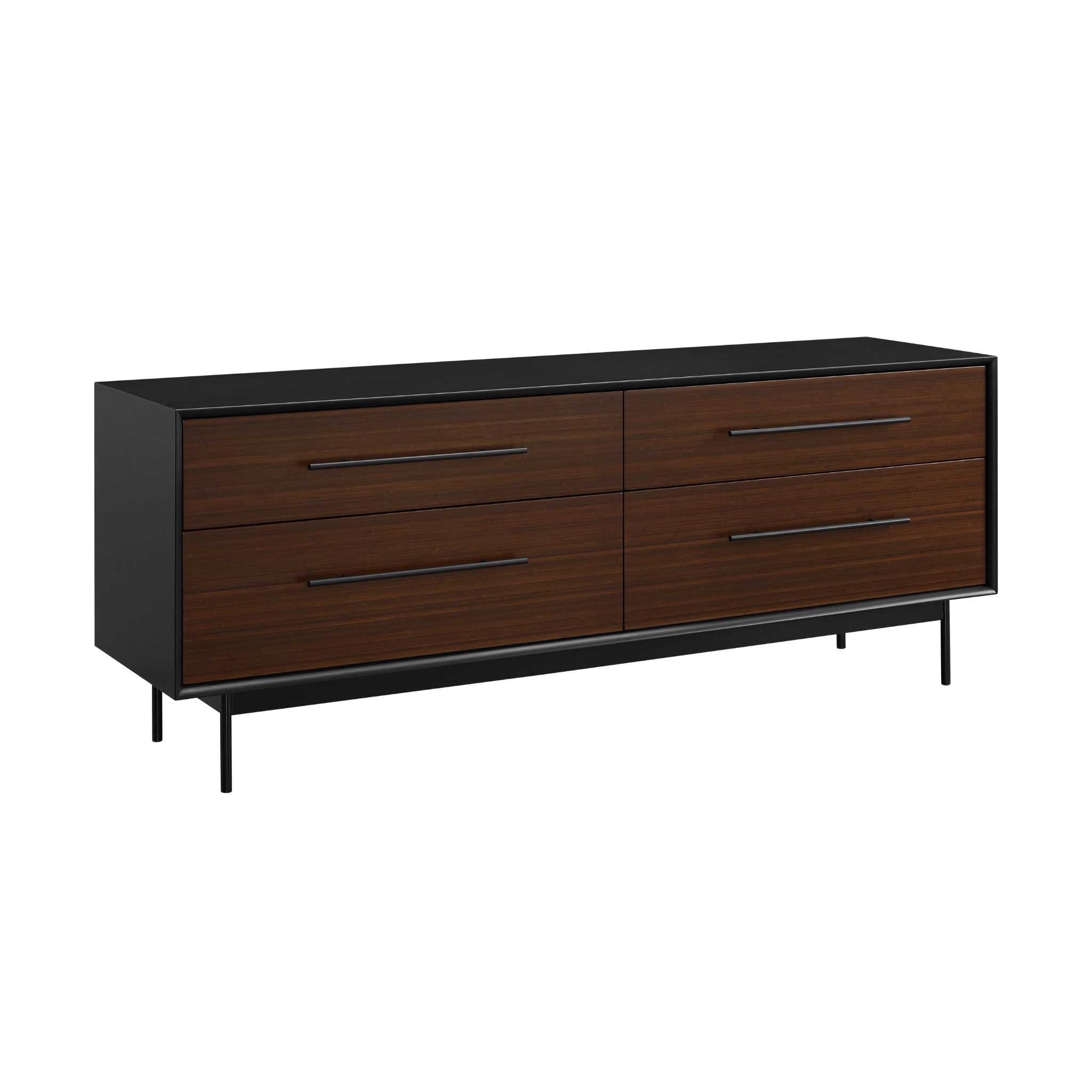


Mid-Century Dressers, the Long Low Line
In a mid-century modern bedroom, a dresser is the longest horizontal mass the room holds, and that length does quiet work. Set low and wide, it drops the room’s center of gravity, lets the wall above it breathe, and gives the eye a place to rest between the bed and the window. Get the proportion right and the whole room feels calmer without a single extra object. Get it wrong and no amount of styling on top will fix it.
Mid-century built this piece around the horizon, with the same restraint that runs through the mid century range as a whole. Tapered or splayed legs lift the case just off the floor so shadow runs underneath and the mass reads as light. Drawer fronts stay flat and honest, their pulls recessed or slim, so the front becomes a plane rather than a grid of hardware. In warm evening light a solid wood face shows its grain as texture, not pattern, and the piece holds weight without turning heavy.
How to choose a mid-century dresser
Length before drawer count
The common mistake is shopping by capacity. A tall chest of drawers stores about the same clothes as a long six-drawer dresser, but the two do opposite things to a room. The tall one stacks visual weight and cuts the wall into a narrow column. The long one settles the room and makes the ceiling read higher. Decide the line first, then let the drawers follow. A dresser that runs most of the way beneath a window does more for a bedroom than another shelf ever could.
A double dresser or a chest
A wide double dresser gives you two banks of drawers at a low height, easy to place under a window or a mounted television. A chest of drawers stands taller and narrower, useful when floor space is tight and storage has to climb the wall instead of stretch along it. Many bedrooms want one of each, the long dresser as the anchor and a chest in a corner, both agreeing in tone with the mid century modern beds across the room. Match their wood tone and leg line and even a mixed pair reads as one family.
Wood tone sets the temperature
Walnut reads warm and deep, and it glows once the lamps come on. Oak reads lighter and can feel sharper unless a darker wall or a wool rug pulls it back. Neither is more correct. What matters is that the dresser agrees with the rest of the room. Match its tone to the bed you have chosen and let a pair of mid century modern nightstands carry the same species across the room, and the pieces read as one decision instead of separate purchases.
Styling and placement
The top is not a shelf
A dresser top invites clutter, and clutter undoes the calm the piece was bought to create. Treat it like a small still life. A lamp with presence, one framed piece leaned rather than hung, a low vessel. Three objects with weight beat ten that scatter. If the surface needs constant tending to look intentional, there is too much on it.
Scale it to the wall, not the closet
Before buying, measure the wall the dresser will anchor, not just the clothes it will hold. Leave a little breathing room on either side so the piece sits as a deliberate object rather than wall-to-wall storage. In a smaller room a single low double dresser often does more than a dresser plus a separate chest, because one clean horizontal line reads quieter than two competing masses.
Building the mid-century bedroom
Storage is the practical backbone of the style, and the dresser is its anchor. Each piece here is chosen by AURA Modern Home for proportion, honest joinery, and finishes that age with restraint. Pair a dresser with matching nightstands to build the dresser and nightstand set that keeps a bedroom coherent, then let beds, storage, and lighting be decided together rather than one at a time. Start with the piece that fixes the horizon, and let the room settle around it.