

TV Consoles
That item has been discontinued, but here are similar options.


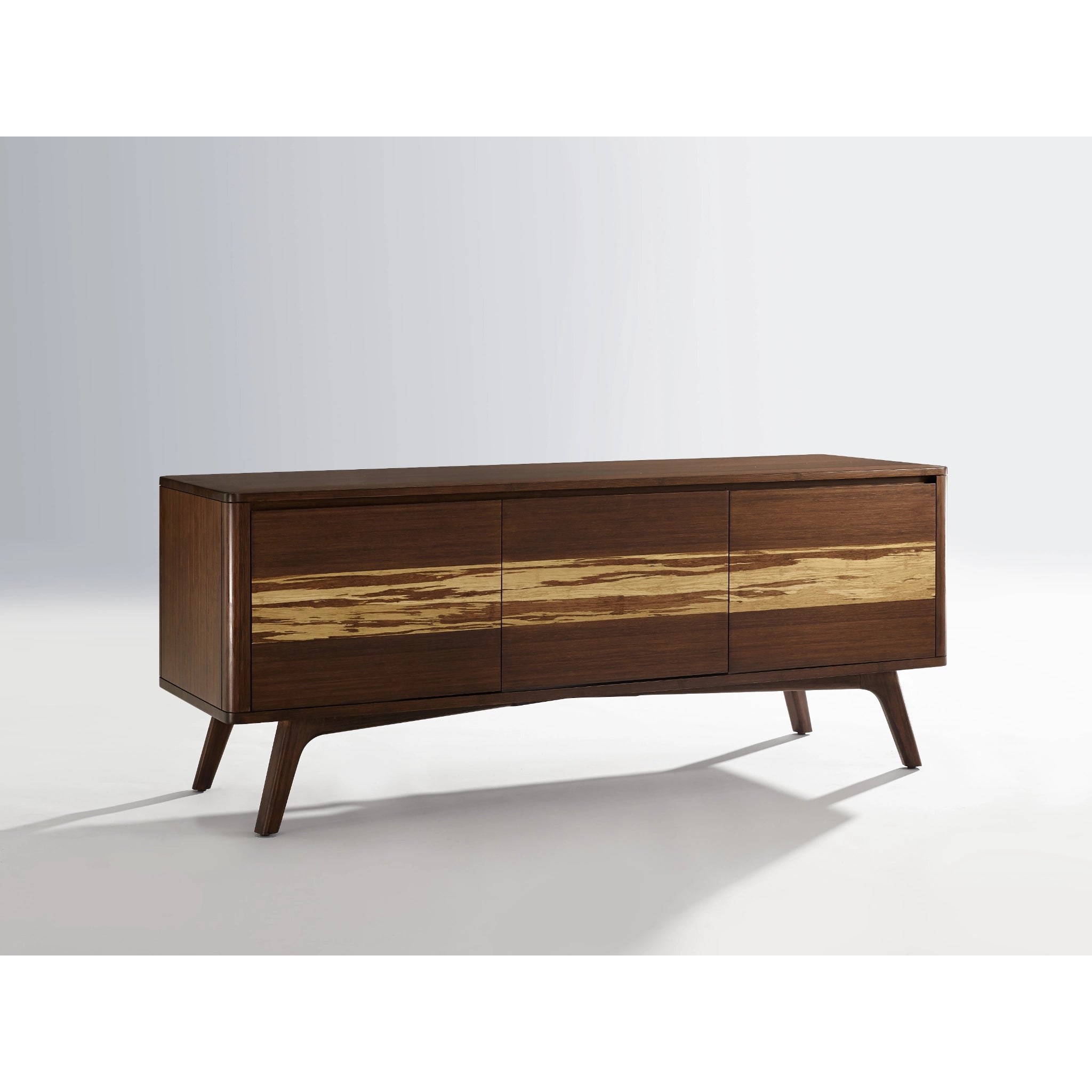
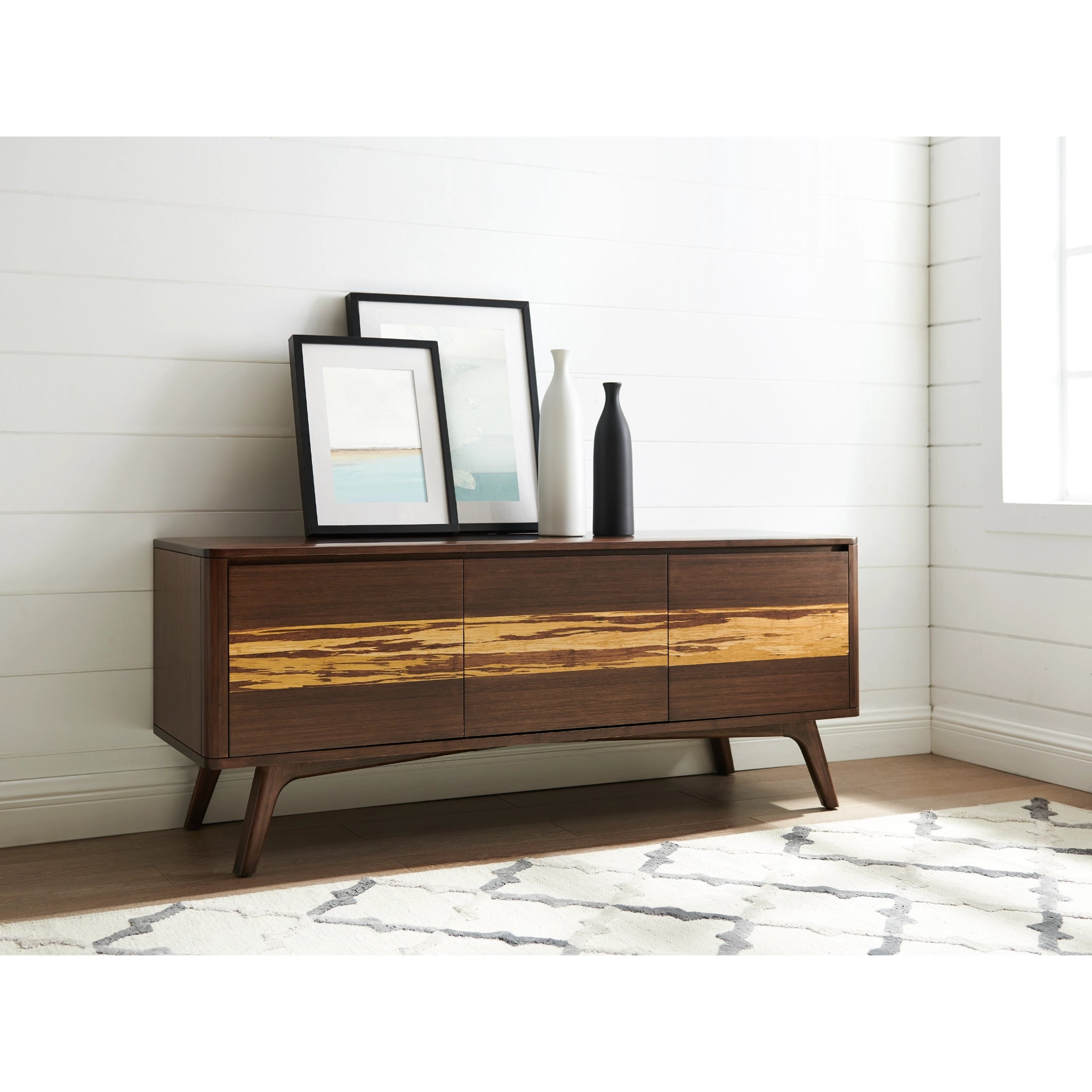


A TV console solves a problem most rooms create by accident: a black rectangle floating on a wall with nothing to hold it down. Long and low, it gives the screen a base, turns the media wall into a composition instead of an afterthought, and quietly absorbs the boxes and cables a television drags along with it. Get the proportion right and the whole wall settles.
Width is the number that matters, and the instinct most people get wrong. A console the same width as the screen looks pinched, like shoes half a size too small. Run it wider, ideally six inches or more past each edge of the TV, and the screen reads as placed rather than perched. The eye wants that margin even if it cannot name why.
How low a media console should sit
Height decides comfort more than looks do. For seated viewing, the center of the screen wants to land around forty-two inches from the floor, which means a true media console runs low, often eighteen to twenty-six inches tall. That is why a low piece reads right under a television and a dining-height buffet does not. A sideboard at thirty to thirty-two inches can still work, just expect the screen to sit a little higher and plan the seating around it.
Open shelves or closed doors
This is the trade-off worth settling before the room is built around it. Open shelving breathes, keeps remotes and a soundbar in reach, and lets components vent their heat, at the cost of showing every wire and box. Closed doors give you visual quiet and a clean horizontal line, but trap heat and block an infrared remote unless the fronts are glass or mesh. Neither is correct. A room you keep tidy can run open; a room with a lot going on usually wants the doors.
What a TV stand does to a dark wall
Remember the television is dead weight until it turns on, a flat black void for most of the day, so the piece underneath is doing the decorating. A wood front warms the wall and catches lamp glow in the evening, softening the screen above it. Black or iron reads graphic and recedes, letting the set disappear into a dark wall at night. A low piece in pale oak does the opposite, holding light and keeping a media wall from going heavy. Many of our lower sideboards and credenzas double as consoles for exactly this reason, and the whole group sits within the wider living room.
Frequently asked questions
How wide should a TV console be?
Wider than the screen by at least six inches on each side. For a 65-inch TV, which measures about 57 inches across, look for a console around 70 inches or more. A generous margin always looks more deliberate than a tight match.
What is the right height for a TV stand?
Aim to land the center of the screen near forty-two inches from the floor when you are seated. Most media consoles run eighteen to twenty-six inches tall to make that work, while a low sideboard around thirty inches suits a larger screen or a higher sofa.
Can a sideboard or credenza be used as a TV console?
Yes, as long as it sits low enough. A sideboard at thirty to thirty-two inches and wide enough to clear the screen makes a handsome console, often with better storage than a purpose-built unit. Check that closed doors are glass or vented if your components rely on a remote signal.
Open or closed storage for media components?
Closed looks cleaner but needs airflow and a path for the remote to reach the box, so glass or mesh fronts help. Open shelves keep everything vented and within reach, which suits a soundbar and a console you do not mind seeing.