

Mid-Century Modern Desks


That item has been discontinued, but here are similar options.


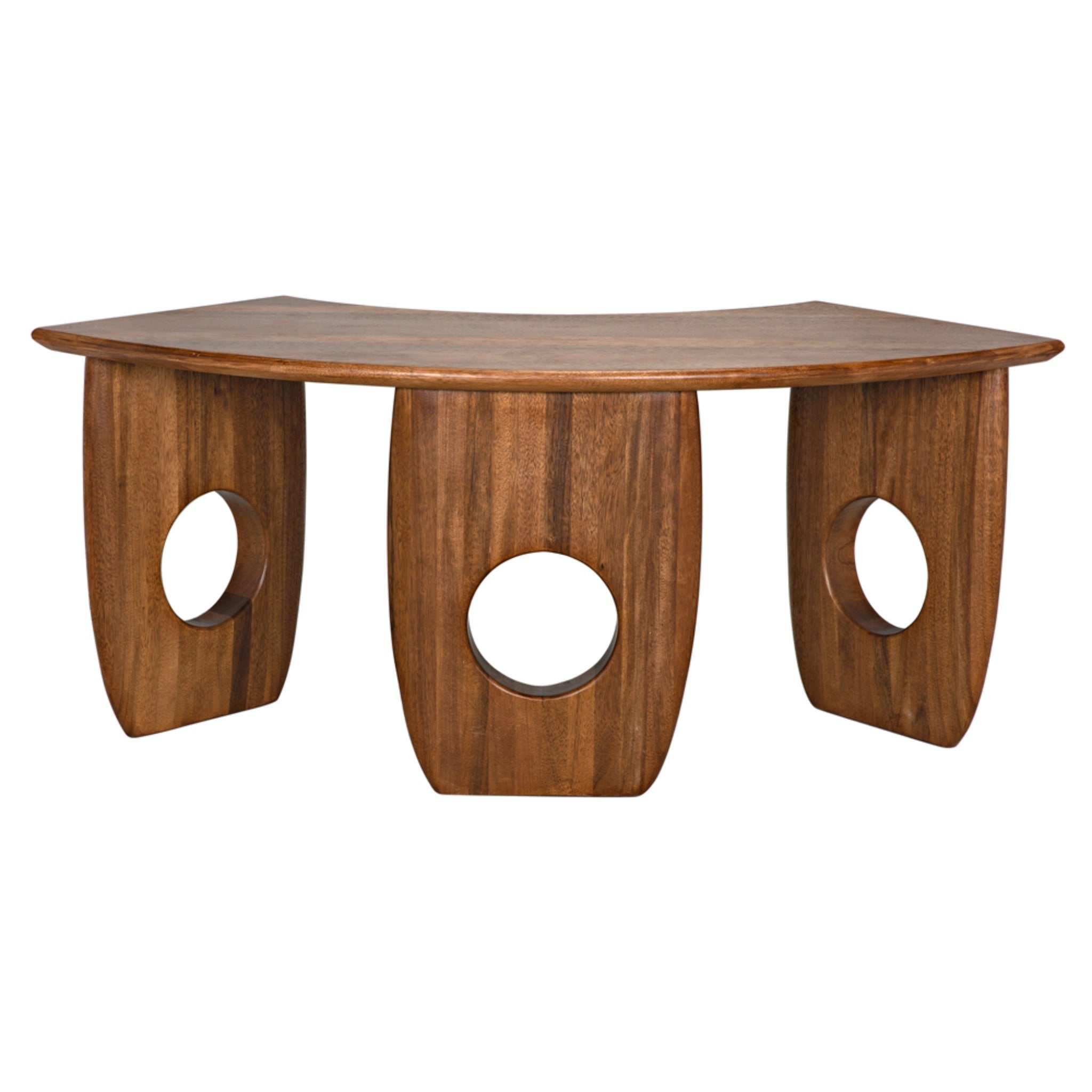


Mid-Century Modern Desks
A mid-century modern desk lightens a room on its legs. The tapered, splayed base lifts the mass off the floor, so even a wide desk reads as air and line rather than bulk, and the eye travels underneath it instead of stopping at the apron. That visual lift is the whole trick of the style, and it is why a mid-century desk can hold a corner without crowding it. It is the same logic running through the rest of the mid century modern catalog.
What the mid-century silhouette does to a room
The era built its furniture on raised, angled legs and clean horizontal tops, and that geometry does real work in a room, a lighter footprint than most of the boxier pieces in the wider office desks range. Lifting the desk off the floor keeps the sightline open and makes a space feel larger than its square footage. A heavy plinth desk plants itself; a mid-century one hovers. In a smaller room, that difference is the reason to choose the style at all.
The look also reads warm rather than clinical, because the era leaned on wood over metal and lacquer. Under an evening lamp a walnut top glows and the angled legs throw a light shadow line across the floor. It is modern without being cold, which is a narrow lane and part of why the style has lasted this long.
Mid-century writing desks and office desks
The style covers two useful shapes. A mid-century writing desk keeps the top shallow and the profile low, ideal for a mid century modern bedroom or a study wall where the desk should stay quiet. A mid-century modern office desk goes wider and often adds a drawer bank, built to anchor a dedicated work corner. Both keep the tapered leg and the warm surface; they differ mostly in how much desk you need.
Several of these are mid-century desks with drawers, the storage tucked into a slim apron so the profile stays low and the legs stay the story. If drawers are your priority, the desks with drawers collection carries the mid-century options alongside the rest; for open storage instead, the mid century modern bookshelves follow the same tapered logic.
Walnut, oak, and the warmth of the era
Material is where the style earns its warmth. Walnut is the signature, deep and grained and rich under a lamp; oak keeps things lighter and more open for a brighter room. The solid wood desks in the range gather both, and either reads unmistakably mid-century when it sits on the right tapered base. It is the same grain-first thinking that should guide the rest of your office furniture, not just the desk, and it carries through the whole mid century modern office.
Watch the finish. A genuine mid-century piece lets the grain show rather than burying it under heavy stain or gloss. The grain is half the design, so a finish that hides it works against the whole point of the era.
Keeping the look disciplined
The common mistake is pairing real mid-century lines with heavy, ornate accessories that fight the restraint the form is built on. The style is spare on purpose. A single sculptural mid century modern lamp and a clean chair read more correctly than a crowded surface. Let the desk stay quiet and it will carry the room.
One practical note: the splayed leg needs floor room to read correctly. Jam it into a tight alcove and the angle gets lost against the wall, which flattens the very silhouette you bought it for. Give it a little breathing space so the legs can do their job.
Pairing the desk with the rest of the room
For the plainer classic form, the writing desks sit alongside these. Choose a mid-century desk for how it lifts the room, then keep everything around it disciplined enough to let the silhouette speak.