

Vintage Old Money Office Furniture
That item has been discontinued, but here are similar options.






A Vintage Old Money Home Office, Built to Hold
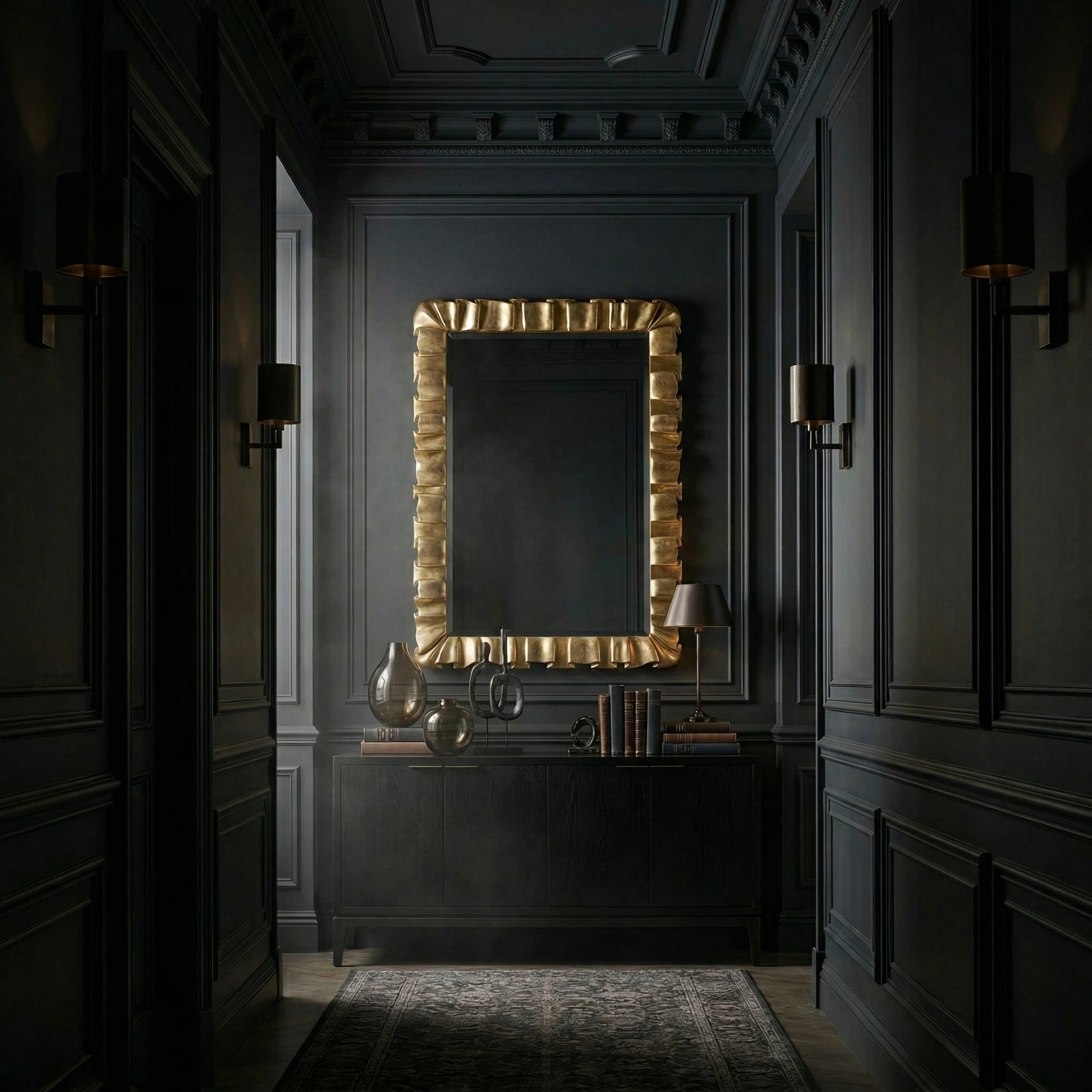
An old money home office does not need to look like an office. It should feel settled, quiet, and capable of long work without visual noise. AURA Modern Home curates old money home office furniture for spaces that hold their shape in evening light, where a lamp replaces overhead glare and materials carry the room.
If you are building across rooms, start with navigation rather than shopping. AURA’s curated home design by room framework helps keep scale, material warmth, and lighting logic consistent across the home. For a sensibility-first view, use our room decor by aesthetic index to keep decisions coherent. To browse the broader category range, explore AURA’s home study furniture collection. For the wider house mood, start at Dark and moody decor and move room by room.
Within this collection, you will find desks, office chairs, storage cabinets, shelves, bookcases, lamps, and supporting pieces chosen for proportion, durability, and quiet authority. The selection is designed to work together without uniformity, so the room can feel assembled over time rather than purchased as a set.
As you browse, compare desk depth, drawer layout, and chair scale before you look at finishes. In a room meant for work, these decisions determine comfort, clarity, and whether the space stays usable past the first week.
A vintage modern home office balances tradition with restraint. Familiar silhouettes stay present, but the room avoids ornament for its own sake. In an old money study, the anchor is an old money desk with posture and durability. A vintage modern desk can be clean-lined, but it should still feel grounded. Old money furniture for study works when the room feels complete before accessories arrive.
This page supports old money home office ideas that stay disciplined. It covers the practical decisions behind old money study design, including how to choose an old money office chair that supports long sessions, how a vintage modern office chair can feel credible in a more traditional room, and how vintage style office furniture fits into a modern house without becoming costume.
Start with the anchor | Layout and storage | Lighting | Materials | Decor and discipline | Diagnose what feels off
Start with the desk
An old money desk should feel as though it belongs to the house. In our judgment, desks that are slightly underdesigned tend to age better than desks that try to prove their style. The best ones have a stable surface, calm edges, and drawers that close cleanly.
If your work is single-task and writing-first, a smaller desk can be enough, especially when storage is nearby. If your work is screen-heavy or multi-surface, desk depth matters and a second table can help. A practical check is whether the room supports a workstation without crowding the front approach. If the desk blocks circulation, the room will feel tense regardless of how good the furniture is.
A vintage modern office chair should support comfort without reading as corporate ergonomic furniture dropped into a study. A chair that is too bulky can dominate the workspace. A chair that is too delicate can make the desk feel oversized and the room feel unresolved. The best chairs support posture quietly and stay visually calm against the desk.
Layout, storage, and quiet productivity
Most home offices fail on organization, not style. A calm workspace is usually the result of a clear layout and storage that does its job. Cabinets, shelves, and bookcases exist to keep the desk surface clean and the mind quiet.
Use storage in layers. Drawers for daily tools. Filing or a cabinet for weekly needs. Shelves for books and a small selection of objects. If you need a partition, keep it functional and simple, more boundary than statement. If your office includes a secondary table or conference surface, treat it as support rather than a second anchor.
Lighting that favors focus over glare
Lighting determines whether a study feels calm or restless. Overhead light can exist, but it should not be the only source. A desk lamp, a secondary lamp on a cabinet, and optional wall light create depth and keep the room workable after sunset.
AURA’s point of view favors glow over brightness. Our approach to Moody interior design keeps the room usable after dark without turning it into a showroom.
Use a simple test. Turn on only the lights you would use after dark and sit at the desk. If the surface throws glare, if your face is underlit, or if the back wall becomes visually noisy, adjust lamp placement before you change decor. If you take video calls, check the background for reflection and clutter. A room can be quiet in person and still feel busy on camera.
A vintage old money office can also fail by getting too dark. If the room becomes unreadable, the mood will not feel calm. It will feel heavy. Let lamps carry warmth, and keep the desk surface and chair upholstery light enough to hold contrast.
Materials, surfaces, and the details that signal quality
Vintage old money rooms succeed on material honesty. Wood adds grounding. Metal adds warmth. Glass can work as a controlled note, but too much reflection can make the room feel unsettled, especially near screens and lamps.
Pay attention to details that matter in daily use. Desk edges, hardware, shelf thickness, cabinet doors, and drawer travel. These are not decorative choices. They are the parts you touch every day, and they are often where durability and value become visible.
Decor and discipline
Decor should not interrupt work. One piece of artwork, one object with presence, a plant for greenery, and then stop. The room should feel complete when the desk is clear and the lamps are on.
If the space starts to feel designed for social media rather than use, remove something. Replace one loud accessory with a quieter material decision, or shift attention back to the desk, the chair, and the light.
Diagnosing what feels off
If the room looks right but feels wrong, start with three checks. Does the desk feel like the clear anchor. Does the chair support comfort without dominating the space. Does storage reduce clutter or add it.
The fix is rarely to add more accessories. It is usually to replace one weak element with a stronger, better proportioned piece, or to simplify the setup so the workspace can breathe.
One final test is simple. Clear the desk completely, then add back only what you touch daily. If the room immediately feels calmer, the issue was not style. It was friction.
To continue building across rooms, return to AURA’s luxury furniture room collections framework and keep decisions coherent from one space to the next.