

How to Create a Dark Academia Bedroom That Feels Collected
Dark academia works especially well in a bedroom because the room already invites the right rituals: reading, resting, low light, and a sense of retreat. The best versions are not costume sets. They feel quiet, layered, and a little private, like a space built by someone who genuinely lives with books, texture, shadow, and time.
The AURA Blueprint
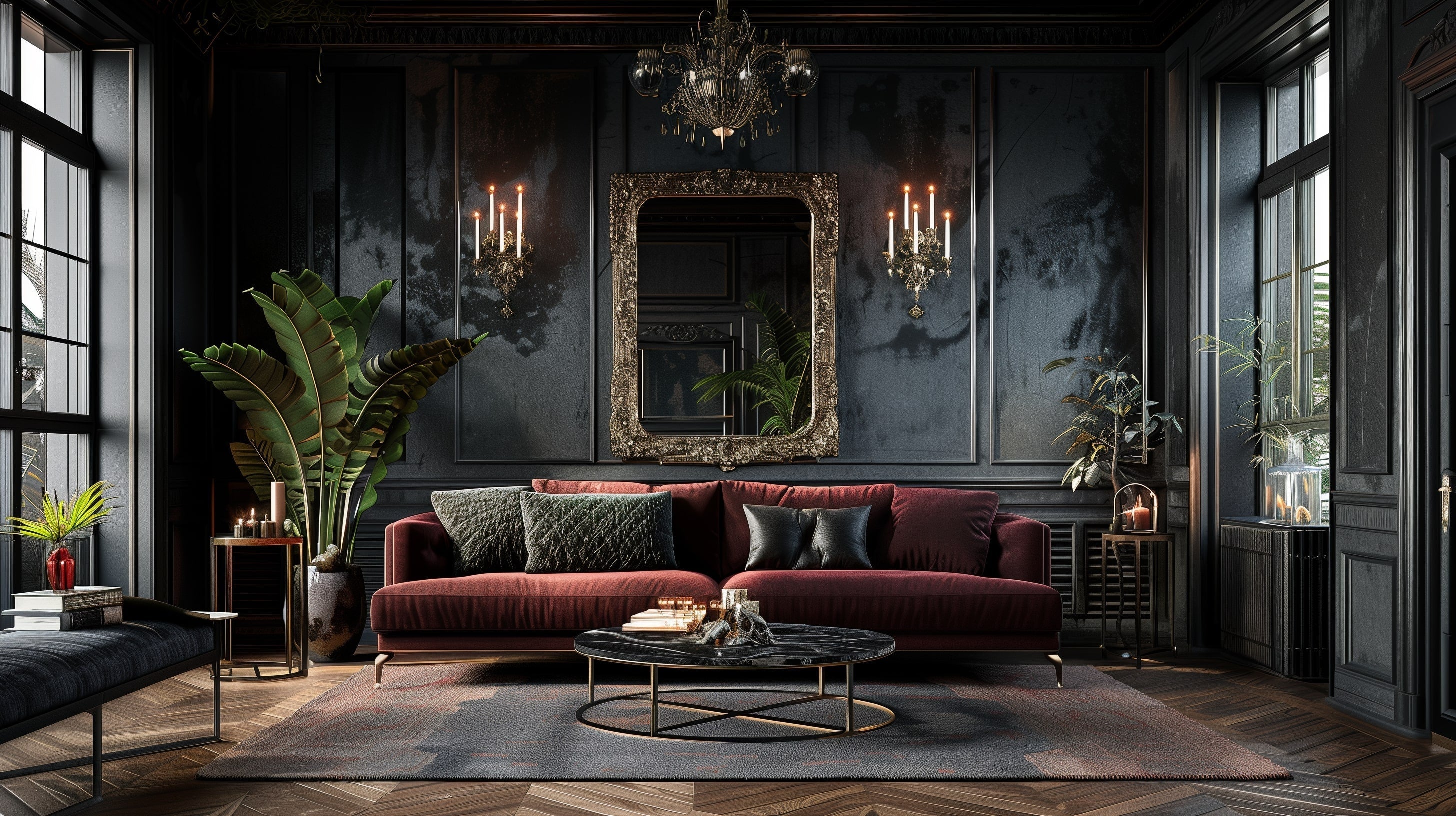
Dark academia lands when the room feels collected instead of themed. Aim for depth, not darkness for its own sake.
- Start with contrast: Pair one or two deep tones with warm wood, parchment, cream, or a restrained metal finish so the room still breathes.
- Buy weight first: Let the bed, rug, storage, or lighting establish the room before smaller decorative objects start competing for attention.
- Plan for night: Test the palette under the lamps you actually use. A dark bedroom has to work after sunset, not simply photograph well during the day.
- Avoid the common mistake: If every surface is equally dark, textured, and visually heavy, the room turns muddy rather than scholarly.
You might think the look is simply an offshoot of gothic fashion or design, but dark academia is better understood as a modern aesthetic assembled from older references. Collegiate architecture, library interiors, campus fiction, portraiture, landscape painting, and the ritual of reading all contribute to its visual language. It is not historical reenactment. It is a livable translation of those ideas.

The History of Dark Academia
The name is contemporary. The references are much older. Dark academia emerged online as a recognizable aesthetic while borrowing heavily from campus literature, old libraries, collegiate architecture, traditional dress, books, and the more romantic or unsettling sides of academic life.
For a bedroom, that distinction is useful. You do not need to recreate a historic study or stack the room with obvious scholarly props. What matters is the atmosphere underneath them: enclosure, material weight, patina, useful pools of light, and the feeling that the room has accumulated slowly.
So how do you create a dark academia bedroom without making it heavy or theatrical? Build it in the order a real room needs. Establish the palette, solve the largest furniture decisions, plan the lighting, then add the details that make the space personal.

Step 1: Get inspired by the dark academia atmosphere around you
Before you shop, look at real atmospheres. Notice old buildings, iron fencing, stone facades, shadowed hallways, worn leather, dark wood, faded textiles, cloudy skies, and the proportions of older rooms. Save the references that keep pulling you back. After a while, a pattern usually appears.
If you would rather begin with complete interiors, the dark academia bedroom ideas page gives you finished rooms to compare. Look past the individual products. One room may work because of dark wood and architectural weight. Another may depend on charcoal walls, pale bedding, a faded rug, and carefully placed lamps.
This prevents a common mistake. People often buy “dark academia” accessories before they know which version of the style they actually want. A room influenced by collegiate Gothic architecture has a different posture from one built around Romantic painting or a restrained reading room. Let your references repeat themselves before you spend money.
Step 2: Research the references, then edit them
Once you have a few images, widen the lens. Look at campus architecture, portraiture, historic reading rooms, film interiors, landscape painting, bookbinding, textiles, and period furniture. You are not building a historical checklist. You are learning which qualities still feel convincing when the obvious theme markers disappear.
For literary context, JSTOR Daily’s discussion of dark academia and the campus novel is useful because it distinguishes the contemporary aesthetic from the older academic stories that inform it. Then come back to the practical question. A bedroom still needs to work for sleep, storage, reading, dressing, and movement.

Step 3: Choose a dark color palette that still has range
Choose a palette that feels shadowed, not sealed off. Black, deep olive, oxblood, charcoal, tobacco, ink blue, and brown-black wood tones can all work. Then decide where the relief comes from. Cream bedding, parchment-colored shades, muted stone, warm taupe, aged-looking metal, or a lighter rug can give the eye somewhere to rest.
Do not choose paint from a small chip alone. Put a generous sample on the wall and look at it in morning daylight, late afternoon, and under the lamps you use after dark. A color that feels nuanced in daylight can become flat, unexpectedly green, overly brown, or almost black once the room is lit for the evening.
Sheen is only part of the performance question. If the room is rented, heavily used, or likely to pick up scuffs near the bed and door, compare the washability and scuff-resistance information for the exact paint formula you are considering. Do not reject a matte finish simply because it is matte, and do not assume a higher sheen will automatically be the better product for your walls.
If painting is not an option, removable wallpaper or mural panels may be useful where permitted by your lease or housing rules. Bedding, curtains, rugs, and artwork can shift a room substantially without changing the walls at all. Establish one dominant field of color first. The smaller objects are easier to judge once that decision is settled.

Step 4: Choose furniture by scale before style
Once the palette is clear, turn to the pieces that control the room. Usually that means the bed first, then essential storage, followed by a desk, bench, or chair only if the room has a real use for one. The most convincing dark academia bedrooms feel anchored before the decorative layer arrives.
Measure the furniture as furniture, not as a category name. A queen mattress tells you the mattress size, not the outside width and length of the bed frame. Record the actual product dimensions, then check them against the wall, windows, outlets, closet access, doorway, and the path you use through the room.
Storage needs another check. A dresser can fit neatly on a wall and still fail once the drawers are open. An armoire can look perfect in elevation and interfere with a door swing. Before ordering a larger piece, tape its footprint onto the floor and test the room in use. Open the closet. Walk around the bed. Sit where a chair would go. Those few minutes prevent expensive proportion mistakes.
Once the footprint works, think about visual weight. Dark-stained wood beside blackened metal can feel layered. Upholstery can soften a room dominated by hard surfaces. An antique or consignment piece can introduce age without requiring a full matching suite.
If the bed carries most of the visual presence, let nearby pieces quiet down. A substantial headboard can work with a simpler nightstand. A lighter bed silhouette can tolerate a heavier chest or armoire. Matching every finish exactly usually removes the depth this style needs.
If you are ready to shop the larger pieces, browse dark academia bedroom furniture with your room measurements already written down. Let dimensions and function eliminate the wrong options before you start comparing finishes.
Explore our Dark Academia Bedroom Furniture


Use the rug to define the bed zone
A rug can do several jobs at once. It softens the transition out of bed, introduces pattern, and gives the largest piece of furniture a clearer territory in the room. Faded traditional patterns are particularly useful here because rust, olive, aubergine, tobacco, faded blue, and cream can break up a dark palette without making it feel bright.
A useful starting point is to make the rug large enough that it still feels intentional from both sides of the bed. The exact dimension depends on the bed, the room, the nightstands, and how much exposed flooring you want to retain. Tape the proposed rug size onto the floor before buying. You will see immediately if it anchors the bed or looks like a small island underneath it.
In a compact bedroom, the same rug can help organize the plan. It can widen the perceived bed zone, soften dark flooring, and keep a nearby desk or chair from looking stranded.
When comparing rugs, look beyond the motif. Ground color, border contrast, pile, texture, and pattern density all change how visually heavy the floor becomes.

Step 5: Add decor after the room can stand on its own
Once the furniture and palette are carrying the room, bring in the objects that make it personal. Framed art, books, ceramic vessels, smoked or colored glass, metal objects, dried botanicals, and plants can all belong here. None of them should have to announce the theme.
If a surface feels busy, remove half of what is on it and look again. Dark rooms are particularly sensitive to small clutter because every object creates another silhouette, highlight, or patch of contrast. A bare section of wood or stone is not unfinished. It gives the objects beside it more authority.
Plants can add movement to a room dominated by still surfaces, but choose them for the actual daylight available rather than for their resemblance to a styled reference image. The plant still has to live there after the photograph is taken.
If you are deciding which decorative categories are worth adding, our guide to where to buy dark academia decor goes further into pieces that can carry the style without turning the room into scenery.
Layer the lighting so the room works after dark
A dark bedroom should not depend on one bright ceiling fixture. Start with what you actually do in the room. Reading in bed needs light at the bed. A desk needs its own task light. A chair that is meant to be used after sunset needs a lamp within reach.
For bedside reading, test the lamp from your normal position rather than choosing by height alone. Sit against the pillows and check two things: the page should receive useful light, and the bare bulb should not glare directly into your eyes. Shade shape, lamp height, mattress height, nightstand height, and your own reading position all affect the result.
Material names are not reliable shortcuts for light behavior. Color, sheen, opacity, texture, weave, position, and the direction of illumination all matter. A dark matte surface can behave very differently from a pale smooth one, and clear glass does something different again. Judge the actual finish in the room rather than assuming that “brass,” “linen,” “velvet,” or “glass” automatically makes a space brighter or darker.
If the room becomes murky at night, try another well-placed lamp before changing the entire palette. Often the missing element is a second pool of useful light rather than a lighter wall color.
For candlelight atmosphere in a bedroom, use battery-operated flameless candles rather than an open flame. The U.S. Fire Administration advises against using lit candles in bedrooms and sleeping areas. If real candles are used elsewhere in the home, follow applicable local guidance and the candle maker’s instructions, keep them stable and attended, and keep them away from anything that can burn.
Explore our Modern Table Lamps


Choose art that adds history without adding clutter
Art is where the room can become unmistakably yours. Landscape paintings with storm-heavy skies, charcoal portraits, engravings, botanical studies, architectural drawings, and shadowed photography can all sit naturally in this setting. The subject matters less than whether the work earns its place on the wall.
Mixed frame finishes can keep an arrangement from looking overly planned, but give the group some visual connection. That might be a narrow color range, similar frame weight, repeated spacing, or a shared sense of age. One warmer frame can be especially useful on a wall otherwise dominated by black or dark wood.
Books still matter, but they work best when they look read rather than deployed. Stack a few on a nightstand. Let some sit horizontally on a shelf. Leave space around them. Filling every surface with old hardcovers is one of the quickest ways to turn a thoughtful bedroom into a set.

Step 6: Let the room take time
You do not need to create a dark academia bedroom in a weekend. This is one of the few aesthetics that often improves when you refuse to finish it too quickly. Start with one or two pieces you genuinely want to live with, then add the next layer when the room shows you what is missing.
The slower pace protects the room from becoming theatrical. Too many immediate references to books, candles, old portraits, dark wood, and antique objects can flatten the whole idea into costume. Patina, contrast, useful objects, and a little restraint are more convincing.
Time also exposes practical mistakes. Maybe the dark wall needs another lamp. Maybe the chair leaves an awkward path to the closet. Maybe the rug looked generous online but feels small under the bed. Live with each major layer before adding the next one. Editing is part of furnishing.
What if dark academia does not fit the rest of your home?
If the rest of your home is lighter, warmer, or more overtly modern, the bedroom does not need to imitate it. Dark academia can work as a concentrated retreat. The connection to the rest of the house may be much quieter.

Carry the connection through one or two details
- Repeat a color already used elsewhere in the house, then take it several shades deeper in the bedroom.
- Carry one metal or frame finish from another room instead of repeating the entire dark academia palette.
- Use similar wood undertones or furniture proportions so the bedroom feels related even when its atmosphere is different.
The best dark academia bedrooms are not simply dark. They have useful light, tactile variation, enough contrast to reveal their materials, and enough restraint for individual pieces to matter. Build around the way you actually sleep, read, dress, and move through the room. The atmosphere becomes much more convincing when the bedroom works before it performs.
For a broader room-by-room look at the aesthetic, including living spaces and studies, continue with our Complete Dark Academia Home Decor Guide.
Frequently Asked Questions

Todd Harmon
Dark bedrooms become convincing when shadow is balanced by proportion, usable light, and materials that reward a closer look. The atmosphere should come from the room itself rather than a collection of obvious symbols. With over two decades in e-commerce and product curation, Todd’s work is defined by a rejection of sterile minimalism in favor of the "moody interior." As the creative architect behind AURA Modern Home, his focus lies at the intersection of mid-century architecture and contemporary shadow, prioritizing material authority and the psychological impact of a well-composed room.


Leave a comment
This site is protected by hCaptcha and the hCaptcha Privacy Policy and Terms of Service apply.