
That item has been discontinued, but here are similar options.


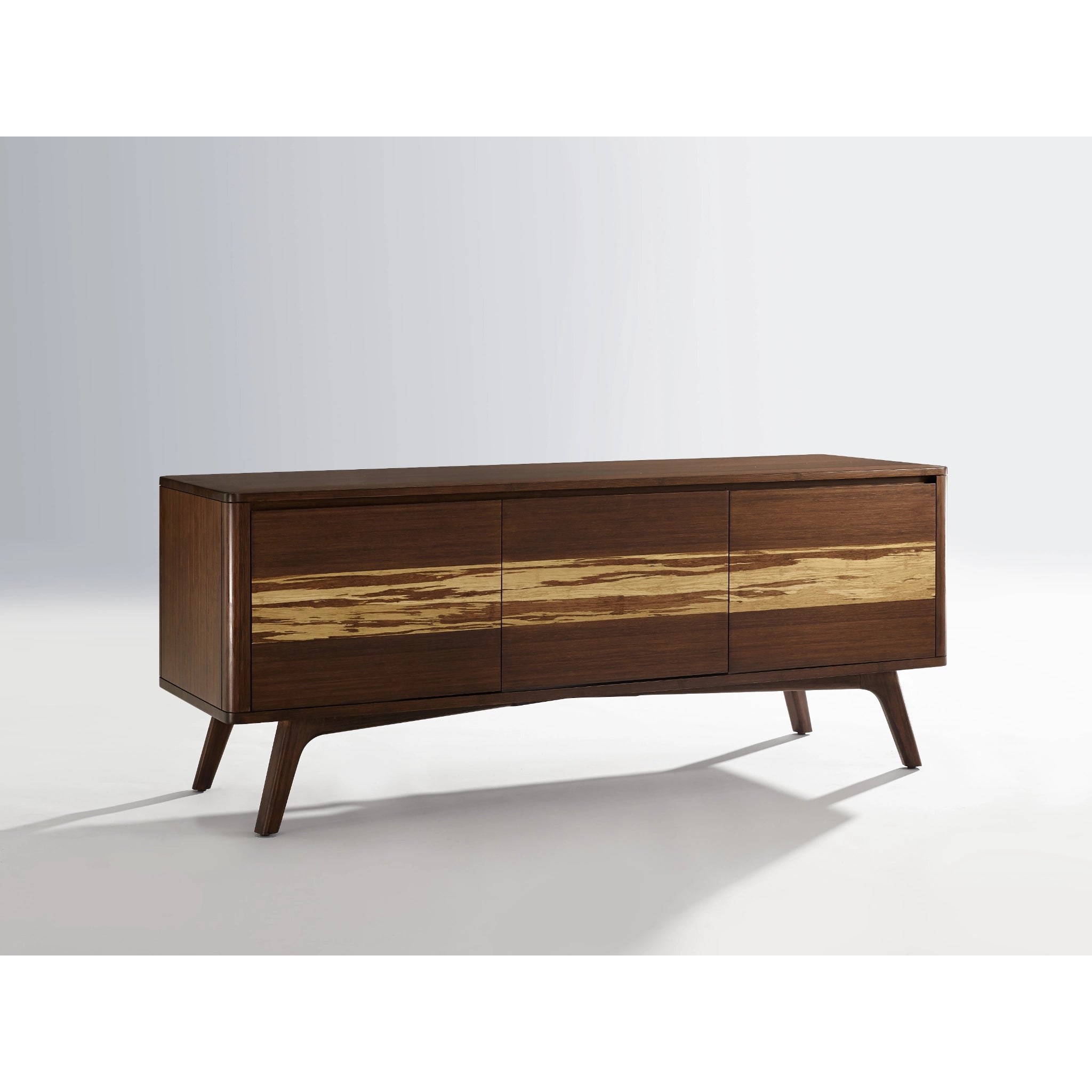
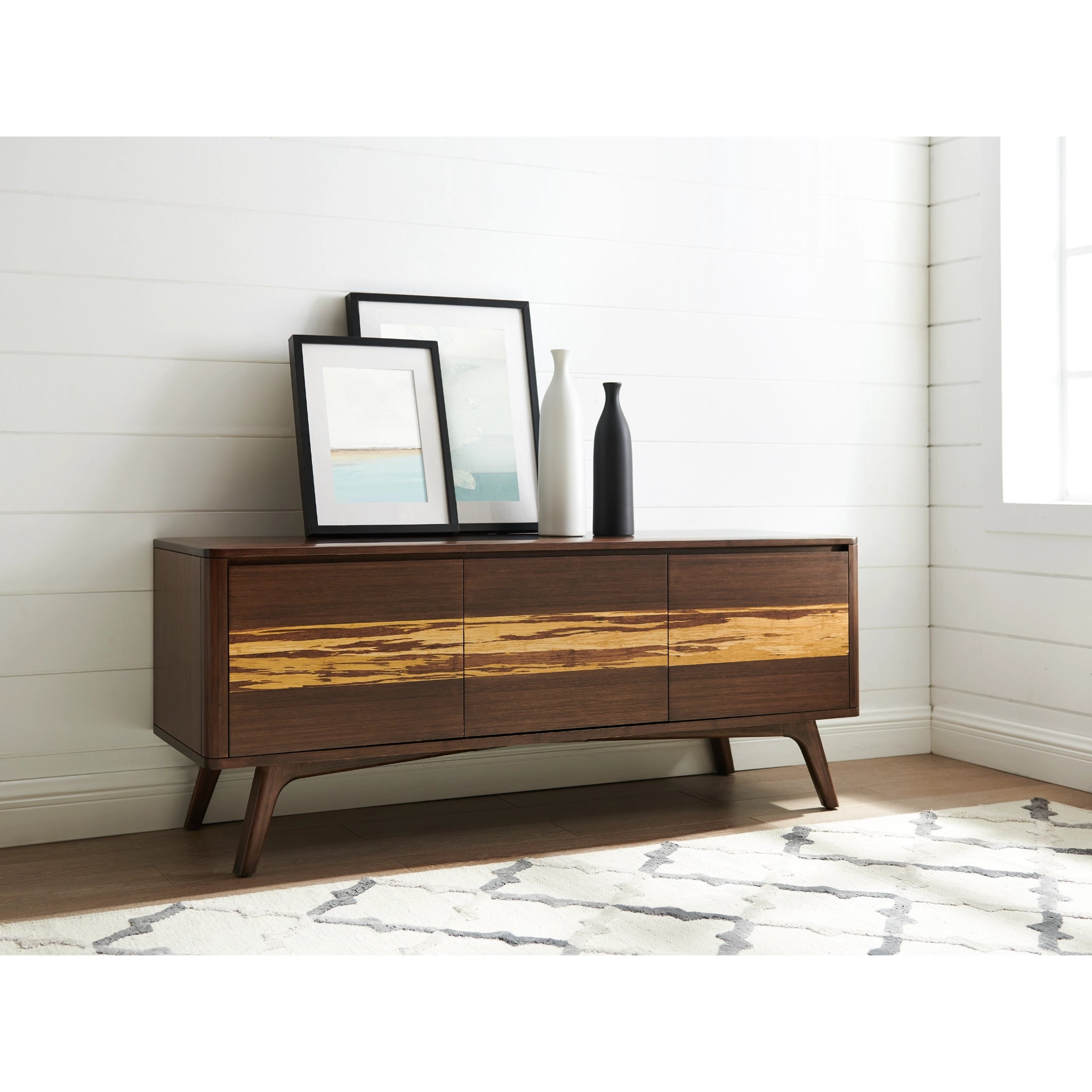


The television is the least attractive object most living rooms contain, and the cabinet under it is the only thing that can argue back. A long low case on legs gives the eye somewhere else to go. The black rectangle stops being the whole wall and starts being one element on a shelf.
That is the job, and it is why the mid century silhouette suits it better than the alternatives. Wide, low, grounded, with a horizontal line strong enough to hold its own against the screen above it. The same proportions that run through the rest of the mid century modern catalog happen to be exactly what a television needs.
Width is not a preference, it is a measurement
The cabinet should be wider than the screen. Not equal, wider. Aim for six to twelve inches of cabinet showing past each edge of the television, which for a 65 inch screen means a stand of at least 70 inches and ideally closer to 80. Check it against the sofa too, because a mid century modern living room reads best when the cabinet and the seating opposite it are within a foot of each other in length.
A television wider than its stand is the most common mistake in a living room, and it reads as top-heavy from across the room even when nobody can say why. The cabinet looks like it is being crushed. Measure the screen, not the diagonal the box advertises, because a 65 inch television is about 57 inches wide.
Height, and the sixteen inch rule
The center of the screen wants to land near seated eye level, which is roughly 42 inches from the floor for most sofas. Work backwards: a 65 inch screen is about 32 inches tall, so its center sits 16 inches above whatever it stands on. That puts the ideal cabinet height around 24 to 26 inches, which is lower than most people expect and the same instinct that makes the mid century modern beds sit low to the floor.
Most media consoles run taller than that because they were designed for the box-television era. A mid century case on short tapered legs usually lands closer to the number you actually want, which is part of why the style keeps working in rooms built sixty years later.
What the era brings to a modern problem
Cane and slatted doors, which hide the equipment while letting a remote signal through. Walnut and teak that absorb the glare a lacquered surface throws straight back at you. Legs that lift the case and keep the floor running underneath, so the heaviest object in the room does not read as a block. It is the same cabinet logic as the mid century modern credenzas and the mid century modern sideboards, built lower and longer for a different job.
The cane detail is the one worth looking for. Solid doors mean opening a cabinet every time something needs a signal, and glass shows every cable. Woven cane solves both and happens to be the detail that most clearly dates the piece to the right era.
Where the cables actually go
Check the back panel before you buy. A cabinet with a solid back and no cutouts forces you to run everything around the side, and the gap between the case and the wall becomes the ugliest six inches in the house. You want at least two grommets, and ideally an open back section.
Ventilation matters more than people expect. A receiver in a sealed cabinet runs hot and dies early. Open shelving on at least one bay, or cane doors, or a gap at the back. Any of the three works.
Living with it
The surface either side of the television is the part that does the design work. A low object and something with a little height, so the screen is not the only vertical mass in the composition. Leave the middle clear, because anything you set in front of the television you will move within a week.
Light it from the side rather than above. A lamp at one end of the cabinet throws warmth across the wood and softens the contrast between a bright screen and a dark room, which is the thing that makes evening television tiring to watch. The cabinet stops looking like furniture holding an appliance and starts looking like part of the room.