
That item has been discontinued, but here are similar options.


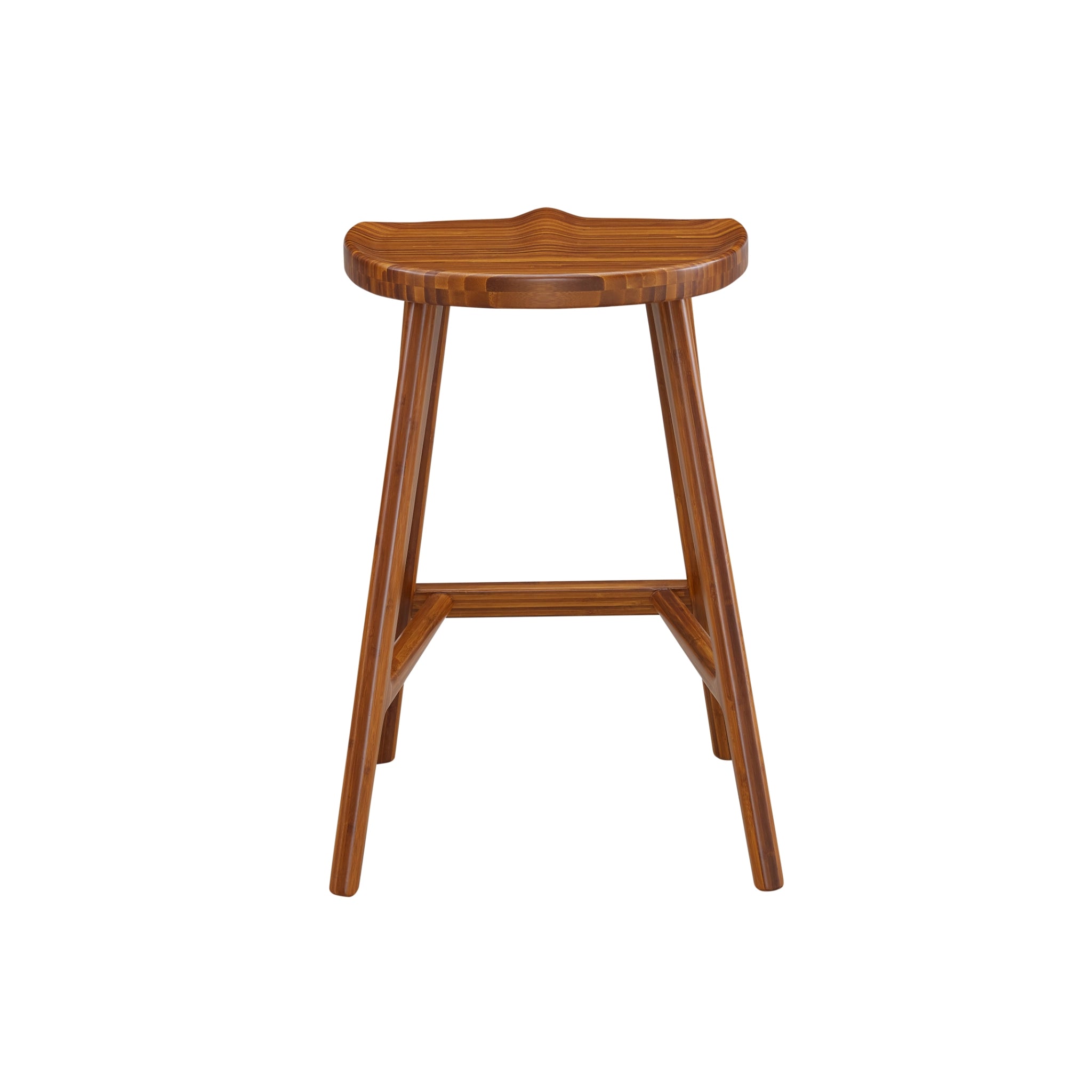
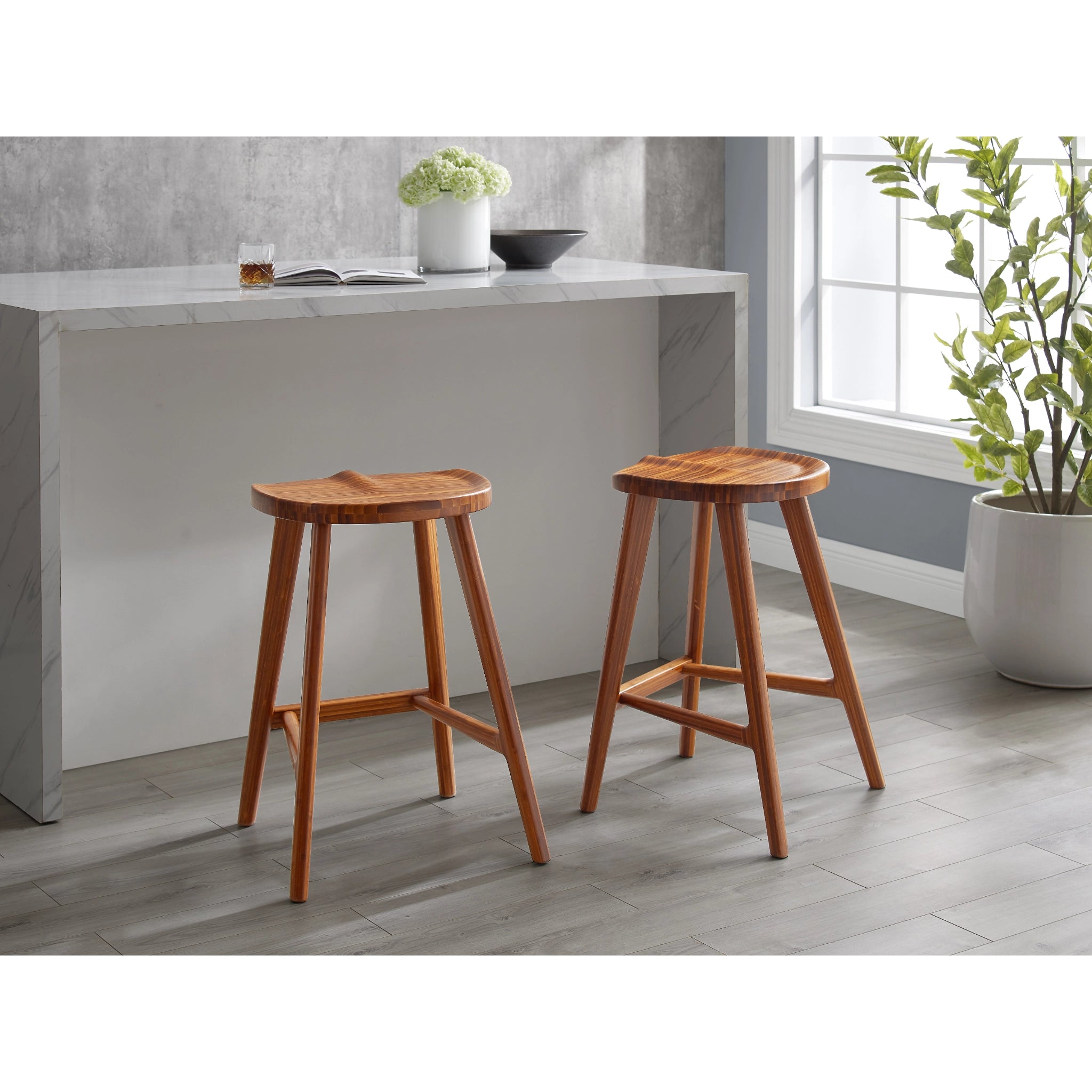


A bar stool is the piece you feel before you see, so in a japandi dining room or the counter that opens off it, the seat matters more than the silhouette. The pieces here are built for the way people actually perch at a counter: a footrest that lands where the foot wants it, a seat that holds you without a cushion, and a profile slim enough to tuck fully under the overhang.
They keep the quiet materials that run through our wider japandi furniture: solid wood legs, woven or shaped seats, and joinery left visible rather than hidden under paint. A row of them at a counter reads as rhythm, not clutter, because each one takes up so little visual weight.
Get the height right before anything else
Stool height is the one measurement that ruins a good stool. Counters and islands sit at different heights, and the gap between seat and countertop is what decides whether a stool is comfortable or a perch you slide off.
Counter, bar, or the in-between
Standard counters want a seat around 24 to 26 inches; a raised bar wants 28 to 30. Measure from the floor to the underside of the overhang, then leave roughly 10 to 12 inches of legroom above the seat. When the number falls between the two standard sizes, size down rather than up, so no one is craning.
Backless or a low back
Backless stools slide fully under the counter and keep the sightline clean, which suits the Japandi habit of an uninterrupted horizontal. A low back gives more support for a seat you linger in. Pick by how long people actually sit, not by the photo.
Match the wood to the room
Because a counter usually sits near the dining table, the stools read in the same glance as the japandi dining chairs a few feet away. Keep the wood species in conversation rather than identical; a shared tone with a slightly different grain feels considered, while an exact match can read as a showroom set. If the counter faces the table, let the stool wood echo the japandi dining tables so the two zones settle into one palette.
Spacing and the quiet count
Leave about 26 to 30 inches between stool centers so shoulders and swivels have room. Crowding a counter with one stool too many is the most common mistake, and it shows the moment two people sit. Give each seat air, and the counter reads calm.
Footrest and floor contact
A footrest that is set too high tires the legs; too low and it goes unused. Wooden stools with a full stretcher spread wear better over years than a single spindle. Felt the feet if the floor is hard, so the stools slide without a scrape.
The counter as a second table
In a lot of Japandi homes the counter does more work than the table, catching breakfast, coffee, and the end of the day. Choose the stool for that daily use rather than the occasional dinner. A seat that is comfortable at 7am, wood that takes a knock and warms with handling, a profile that disappears under the counter when no one is there. Get those three right and the stools stop being furniture you notice and become the spot the household drifts to.