
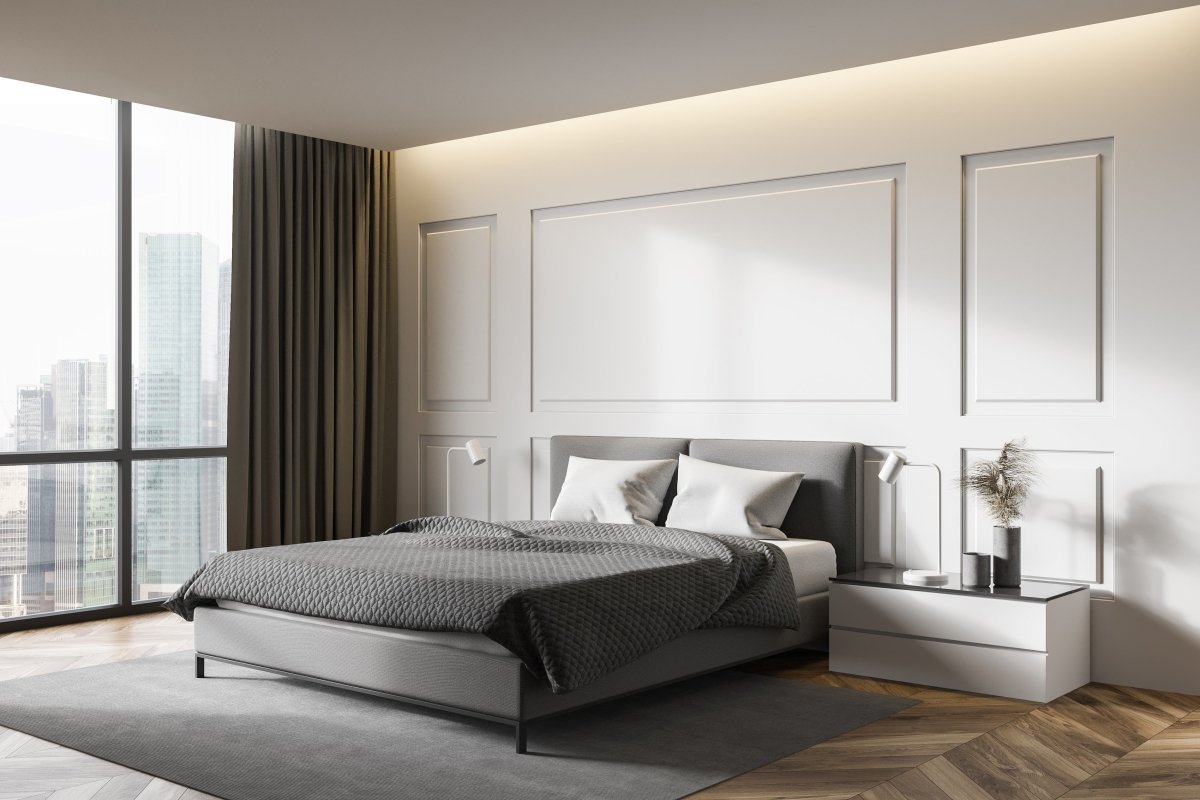
Choosing a rug for a queen bed is mostly a question of proportion. The right size makes the bed feel grounded, softens the floor where you actually step, and helps the rest of the room read as intentional instead of improvised.
In this guide, we'll break down how to choose the right rug size for a queen bed, when each standard size makes sense, and how to place it so the room feels balanced from the first glance to the first barefoot step.
The AURA Blueprint
A queen bed has enough visual weight to need a real floor plan around it. Start with the mattress footprint, then choose a rug that gives you meaningful reveal at the sides and foot, not just a decorative sliver.
- Start with 8' x 10'. For most queen bedrooms, it is the most reliable size and the easiest to place well.
- Avoid a skimpy reveal. If the rug only peeks out a few inches, it usually reads undersized rather than tailored.
- Decide on furniture legs. Keep nightstands fully off the rug, or go large enough that the placement feels intentional.
- Choose the right pile. A flatter weave or low to medium pile is easier under bed legs and easier to maintain in a bedroom.

(source: @houseof.lais)
Let's Talk Rugs: Factors to Consider
Room Size and Layout
Start with the room, not the rug. In a smaller bedroom, an oversized rug can flatten the layout and leave too little visible flooring around the perimeter. In a larger room, the opposite problem shows up fast. A rug that is too small makes the bed look like it is floating in the middle of the room.
Layout matters just as much. If your queen bed sits against one wall, you do not need equal reveal on all three sides. Prioritize the side you enter from and the foot of the bed, where the rug will actually be seen and felt.
Bed Frame and Footboard
Another thing to think about when picking the perfect rug for your bed is the profile of the bed itself. A low platform bed usually benefits from a larger rug because the rug becomes a bigger part of what grounds the room visually.
A taller bed frame or a substantial footboard changes the read. In those rooms, you want enough rug to feel generous, but not so much that it fights with the bed for attention. One common mistake is forgetting how much visual mass a thick footboard adds. The rug does not need to match that weight, but it does need to support it.

(source: @tiffanyleighdesign)
Nightstands and Other Furniture
When you're choosing the rug for your bedroom, don't forget to think about the other furniture in the room. Bulky nightstands, a bedroom bench at the foot of the bed, or an accent chair in the corner can all change what size feels proportionate.
The key is consistency. Either let the rug sit clearly under the main bed zone and keep surrounding pieces off it, or size up enough that the layout feels deliberate. The awkward middle ground, where only front corners catch the rug, is what usually makes a bedroom feel unresolved.
Personal Preferences and Style
Style still matters. A tonal rug with a soft pattern can calm a room with strong furniture lines, while a bolder rug can do more of the decorative work in a simpler space. What matters most is not whether the rug is loud or quiet, but whether it feels scaled to the room.
Texture is part of that equation. A plush pile feels inviting, but under a bed it can also compress and show traffic more quickly. A lower pile or flatweave often looks cleaner in a bedroom, especially if you like the room to feel tailored rather than overly fluffy.
Standard Rug Sizes for a Queen Bed
A queen mattress measures 60" x 80", which gives you a useful starting point. From there, the real question is how much rug you want visible at the sides and foot of the bed, and whether the rug needs to support nightstands, a bench, or just the bed itself.
For most rooms, aim for roughly 18" to 24" of rug showing on each open side. Less can work in tight spaces, but once the reveal gets too narrow, the rug starts to look accidental.
5' x 8'
A 5' x 8' rug can work with a queen bed, but it is usually a partial-placement solution, not the default. It works best in a smaller bedroom, a guest room, or a layout where the bed is pushed closer to one wall.
The smartest way to use this size is under the lower two-thirds of the bed, leaving more rug visible at the foot than at the head. It gives you softness where you step out of bed without trying to anchor the entire room. What it does not do well is support both the bed and surrounding furniture.

(source: @himynameisxen)
6' x 9'
6' x 9' is a strong middle-ground size. It works well in medium bedrooms where you want more coverage than a 5' x 8', but you do not have enough open floor or furniture clearance to justify an 8' x 10'.
This size usually looks best when it runs under the lower portion of the bed and extends generously past the sides. It can feel especially right in apartments and narrower rooms where every extra inch matters.
8' x 10'
If there is one size that solves the queen-bed question most often, it is 8' x 10'. It usually gives you enough reveal at the sides and foot to make the bed feel properly anchored, and it can handle a bench or a little more visual breathing room without feeling oversized.
It is also the easiest size to style. You can place the rug fully under the bed area or under the lower two-thirds, depending on the room. That flexibility is why 8' x 10' tends to be the safest answer when you want the room to feel settled without overthinking every inch.
9' x 12'
9' x 12' is for a genuinely spacious bedroom or for layouts that include more than the bed. If you have a bench, substantial nightstands, or even a small sitting area in the same room, this size can unify the space instead of breaking it into fragments.
The trick is to use it only when the room can support it. In an average bedroom, a 9' x 12' rug can crowd the perimeter. In a large room, though, it creates the kind of calm visual foundation that makes everything above it feel more expensive and more composed.
One mistake shows up again and again: choosing a rug based on what fits under the bed frame instead of what the room needs to see. The rug should frame the bed visually, not disappear beneath it.
Rug Placement Options for a Queen Bed
Once you have the size right, placement decides whether the room feels calm or slightly off. With a queen bed, small shifts matter. A rug pulled too far forward can make the bed look disconnected. A rug tucked too far back can feel invisible.
Centered
Centering the rug under the bed is the most classic option, and in most rooms it is still the cleanest. The bed sits squarely on the rug, the reveal is balanced from left to right, and the room feels ordered right away.
This approach works especially well in larger bedrooms where the bed is the clear focal point and there is enough surrounding floor for the rug to show with confidence.

Under the Bed
Placing the rug under the bed so that it extends from the sides and foot is the most practical arrangement for daily use. It gives you softness where you step and keeps the rug visually tied to the bed.
This is also the placement that best rewards accurate sizing. Too small, and the rug disappears. Too large, and it can take over the whole room. For most bedrooms, this is where 8' x 10' earns its reputation.
A Look We Love: Layered Rugs
Layered rugs can work beautifully with a queen bed, especially when the room needs texture more than scale. A larger neutral base rug can anchor the room, while a smaller patterned rug at the foot of the bed or slightly off-center adds character without forcing the whole bedroom into one style move.
The trick is restraint. Layering works best when one rug handles scale and the other handles texture or pattern. If both rugs try to dominate, the room starts to feel busy fast.
It is also one of the easiest ways to make a simple bedroom feel considered. You get softness, contrast, and a more collected look, all without changing the core layout.

(source: @modernbymiles)
Ready to find the dream rug for your queen bed?
The right rug does more than sit under the bed. It sets the room's proportions, gives the bed a clear visual footprint, and changes how the space feels when you walk into it at the end of the day.
If your room is compact, a 5' x 8' or 6' x 9' can work with careful placement. If you want the easiest, most dependable answer, 8' x 10' is usually the one. And if your bedroom has the scale for it, 9' x 12' can make the entire room feel quieter and more resolved.
Measure first, decide how much reveal you actually want, and choose a rug that supports the room you have, not the one you wish you had. That is usually the difference between a rug that merely fits and one that makes the bedroom feel finished.
Frequently Asked Questions

Todd Harmon
Choosing the right rug for a queen bed is rarely about a single measurement. It is about how proportion, texture, and floor coverage work together to make a bedroom feel settled, quieter, and more intentional. With over two decades in e-commerce and product curation, Todd’s work is defined by a rejection of sterile minimalism in favor of the "moody interior." As the creative architect behind AURA Modern Home, his focus lies at the intersection of mid-century architecture and contemporary shadow, prioritizing material authority and the psychological impact of a well-composed room.


Leave a comment
This site is protected by hCaptcha and the hCaptcha Privacy Policy and Terms of Service apply.